In Part 1: How People Find Your Wix Site on Google, we explained where visibility happens and why many Wix sites aren’t seen even when they’re live and functional.
This part focuses on the next step.
Even if your business appears on Google, there’s a bigger question: Are people seeing you before they make a decision?
That decision often happens above traditional search results.
How Showing Up Above the Search Results Works (Explained at a Glance)
Showing up above the search results means your content is reused as answers, visuals, or expandable results before standard listings appear.
What’s happening
Google surfaces answers, images, videos, and questions directly on the results page.
Why it’s happening
Search systems prioritize speed, clarity, and reduced effort.
What this means
Pages that are easy to reuse get seen first, even if they don’t rank #1.
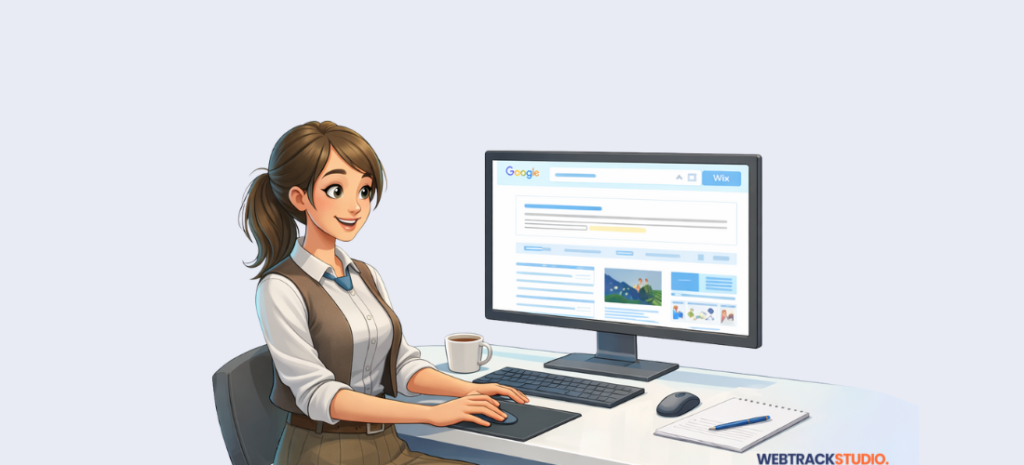
Google does not show content above the search results in just one way. It uses several different surfaces, answers, featured snippets, expandable questions, images, and videos. Each one follows slightly different rules.
The sections below walk through those surfaces one by one. You will see why some pages get reused early in search results and others are skipped, even when they rank. Each section focuses on what to pay attention to so your content has a better chance of being selected and shown before traditional listings.
Read this less like a checklist and more like a set of lenses. Once you understand how each surface works, it becomes much easier to spot where your visibility is being limited and what to adjust first.
How Google decides which answers appear before search results
Google often tries to answer the question before sending users to a website.
That’s why modern results include:
- Short answer boxes at the top
- Expandable “People Also Ask” questions
- Images and videos mixed directly into results
These elements take up the most space and attention.
A page ranking #4 or #5 can still be noticed first if:
- The answer is clearer
- The structure is easier to extract
- The content reduces effort for the reader
The goal isn’t just ranking.
The goal is being selected as the answer.
How to get selected for featured snippets
Featured snippets are the highlighted answer boxes that appear above organic results.
Google doesn’t always choose the highest-ranking page. It chooses the page that answers the question most clearly and directly. That’s why smaller sites can win snippets over larger brands.
When the question is specific, clarity consistently beats authority.
Wix supports this approach directly by recommending clear question-and-answer formatting for search visibility:
https://support.wix.com/en/article/getting-your-site-found-on-google-seo-best-practices
How to find the questions Google wants answered
Most snippet opportunities already exist inside your business.
They come from:
- Questions customers ask on calls or emails
- Questions you explain repeatedly
- Questions prospects ask before buying
Google reflects this demand through:
- “People Also Ask” questions
- Follow-up questions that expand as users click
Every visible question is a visibility opportunity. If people are asking it, Google wants a clear answer.
How to structure answers so Google can reuse them
TGoogle can only reuse answers that are easy to extract.
Snippet-friendly content follows a simple structure:
- Use the exact question as a heading
- Answer it immediately in plain language
- Expand only after the answer is complete
A strong paragraph answer is usually:
- Direct
- Complete
- Around 40–60 words
This isn’t oversimplifying. It’s removing friction.
Why lists and tables appear above regular results
Lists and tables perform well because they reduce effort.
They work best when:
- Steps are clearly separated
- Comparisons are obvious
- Decisions are easier to make
Formatting helps people first. If a human can scan it easily, Google can reuse it easily.
How to appear multiple times using “People Also Ask”
The “People Also Ask” section isn’t extra content. It’s a visibility multiplier.
One well-structured page can:
- Answer the main question
- Also appear for several related questions
- Show up multiple times in one search
This works when:
- Content isn’t buried inside long paragraphs
- Each question has its own subheading
- Answers are direct and self-contained
How images help you show up and get chosen
Images now appear directly inside standard search results. For many service businesses, images influence decisions more than text.
Strong images include:
- Work you’ve actually done
- Before-and-after comparisons
- Your team and workspace
- Results shown in real context
Small details matter:
- Descriptive file names
- Alt text written like a description, not keywords
- Images placed near relevant answers
Images aren’t decoration. They’re proof.
How simple videos help you appear in search
You don’t need a YouTube channel or polished production.
Even a few simple videos can help you appear in:
- Video results
- Local searches
- “How does this work?” queries
What works best:
- Explaining your service
- Answering common questions
- Showing your process
- Short testimonials or walkthroughs
Short, clear, and honest beats polished. When embedded on relevant pages, videos support both page visibility and video visibility.
How to use Search Console to guide visibility growth
Search Console isn’t meant to be checked daily.
It answers simple questions:
- Are impressions increasing?
- Which pages are gaining visibility?
- What questions are starting to appear?
Review monthly. Look for patterns. Adjust structure, not volume.
Visibility grows gradually, not all at once.
What works for showing up above the results
Showing up early in search comes from:
- Answering real questions clearly
- Structuring content so it’s reusable
- Supporting answers with visual proof
- Making expertise easy to recognize
Featured snippets, images, and videos aren’t advanced tactics anymore. They’re part of how search works now..
Frequently Asked Questions
Do I need a new page for every “People Also Ask” question?
No. One well-structured page can appear for multiple related questions.
What’s the ideal length for a featured snippet answer?
About 40–60 words for paragraph answers. Lists usually work best with 3–8 items.
Can a Wix site show up above big brands?
Yes. Google prioritizes clarity and usefulness over brand size for snippets and answers.
How long does it take to appear in a featured snippet?
If your page already ranks on page one, changes can show results within days or weeks.
Should every page try to win snippets?
No. Focus on service pages, FAQs, and pages that answer decision-making questions.
What next?
If you want to check whether your pages are eligible to show up above the results,
request a quick visibility review
In Part 3: How to Keep Growing Your Visibility Over Time (Part 3 of 3), we’ll cover how visibility compounds, plateaus, or drops and what keeps it stable long-term.